Anal Sex STD Screening: What You Need to Know
Did you know over 50% of people who are sexually active may get an STI by 25? Many don’t think about getting tested for STDs when they have anal sex. This is because talking about anal sex health is not as common as talking about vaginal sex.
It’s very important to get tested for STDs, even more so for those who have anal sex. This helps keep everyone’s sexual health safe and stops infections from spreading.
Key Takeaways
- Anal sex carries unique risks for STIs that should not be ignored.
- Regular screening is essential for early detection and treatment.
- Everyone engaging in anal sex should seek comprehensive STD testing.
- Awareness and communication about anal sex health improve safety for partners.
- Testing can be done in various settings, including confidential at-home options.
Understanding Anal STIs
Anal STIs are infections that can harm your sexual health. It’s important to know about these infections and their signs. This knowledge helps you protect yourself and get tested when needed.
Common Anal STIs
Many infections can spread through anal sex. Here are some common ones:
- Herpes
- Chlamydia
- Gonorrhea
- Human Papillomavirus (HPV)
- Syphilis
- Hepatitis A, B, and C
Symptoms to Watch For
Knowing the signs of anal STIs is key. Many people don’t show obvious symptoms. Look out for:
- Unusual discharge from the anus
- Anal pain or discomfort
- Bleeding during or after sex
- Blisters or sores around the anal area
Even without symptoms, you can spread the infection. So, getting tested regularly is very important.
Why STD Testing for Anal Sex is Essential
Anal sex needs you to know about STD testing. It’s very important for keeping your health safe. People in LGBTQ+ communities might face special health issues.
Many STDs don’t show symptoms. So, getting tested often is key to catching them early.
The Importance of Regular Testing
STD testing keeps you safe and aware of your health. It finds infections early, which lowers risks. You should get tested yearly or after meeting new partners.
Risks of Untreated STIs
Not treating STIs can cause big health problems. These include pain, chronic issues, or even cancer risk. Ignoring STD testing can lead to body-wide infections.
Finding infections early protects you and your partners. It’s all about keeping everyone’s health safe.
Who Should Get Tested?
Knowing who should get tested for anal STDs is key for good health. Some groups are at higher risk and need to test often. This helps everyone stay healthy and keeps communities safe.
It’s important to know when to get tested. This can help manage STIs better.
High-Risk Populations
People with many partners, men who have sex with men, and those without protection are at risk. They need to test often. This helps catch infections early.
When to Seek Testing
Everyone who is sexually active should test regularly. If you have symptoms like unusual discharge or pain, test right away. Not using protection means you should test immediately.
Getting tested every year is a good idea, even more so for LGBTQ+ individuals. This helps keep everyone healthy.
How Anal STI Testing is Conducted
Anal STI testing is key for sexual health. It’s good to know about the tests and what happens during them. This knowledge helps you feel ready for your test and makes choices about your health.
Types of Tests Available
There are many tests for anal STI testing. Some common ones are:
- Swab Tests: These take samples from the anal area to check for infections like chlamydia and gonorrhea.
- Blood Tests: These are for STIs like HIV and syphilis.
- Urine Tests: Though rare for anal tests, urine tests can be used sometimes.
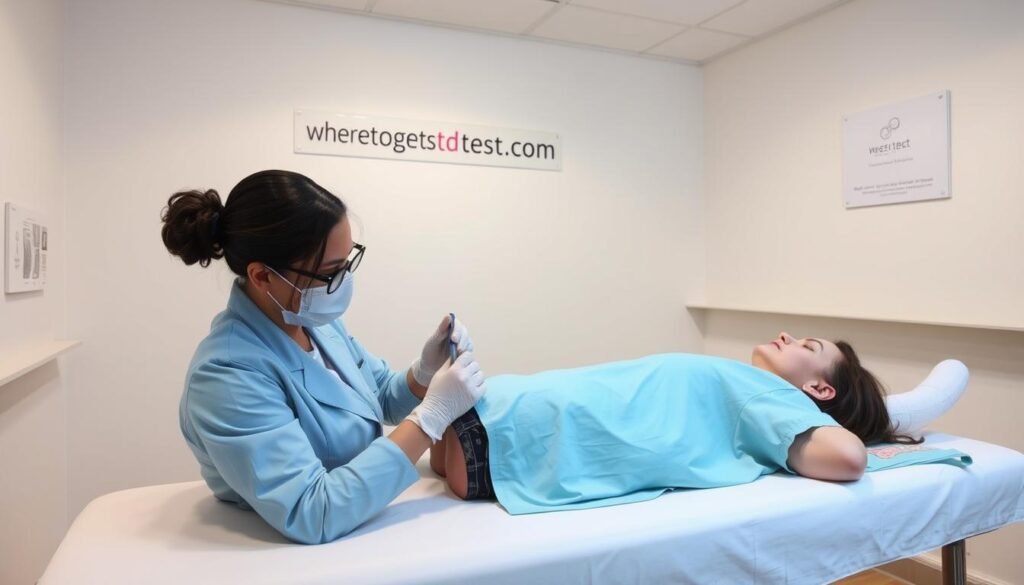
What to Expect During Testing
When you get tested, it’s a simple process. First, you’ll talk about your sexual history. This helps the doctor choose the right tests for you. Then, you’ll get tested with:
- A quick look at the anal area.
- Sample collection, which is usually not very painful.
- Clear instructions on what to do next.
This makes sure you understand your test results and feel good about your health.
Relationship Between Anal and Genital STIs
Understanding the link between anal and genital STIs is key to good sexual health. Many STIs can affect both areas, leading to undetected infections. This means we need to check both areas to find all infections.
The Overlap of STIs
STIs can overlap, making diagnosis and treatment tricky. Infections like gonorrhea and chlamydia can be in both places. This can cause people to ignore symptoms in one area while ignoring others.
Knowing about this overlap helps us understand and deal with health issues better.
Comprehensive Screening Importance
Comprehensive screening is essential for anal and genital STIs. Testing both areas helps catch all infections. This approach helps find problems early and treat them well.
Results Interpretation and Next Steps
Understanding your test results is key to managing your anal health. Whether the results are positive or negative, knowing what they mean is important. It’s vital to talk to healthcare professionals quickly to discuss your findings and treatment options.
Understanding Your Test Results
When you get your test results, it’s important to understand them clearly. If the results show you have an STI, you need to act fast. Make an appointment with your doctor to talk about treatment plans that fit your situation.
When to Return for Further Testing
After the first test, you might need to go back for more. This could be to check if the treatment is working or to handle any ongoing symptoms. Going back for regular check-ups is important for your health. It helps you catch problems early and get better faster.
Confidential and At-Home Testing Options
People looking for private ways to check their sexual health might like at-home STI tests. They keep your info safe and help you stay healthy. More folks are choosing these options as they feel more comfortable with their health.
Benefits of At-Home Testing
At-home tests have big pluses. They let you test for STDs privately, without going to a doctor. This makes you feel safer and more comfortable. You can take samples when it’s easy for you and send them in.
This saves time and makes it easier to get tested. With telehealth, getting checked is even simpler. It helps you stay on top of your health.
Available Testing Kits
There are many testing kits for anal health. Companies like myLAB Box and Nurx have kits for gonorrhea and chlamydia. These tests are accurate and keep your info private.
For more options, check here. This shows how important it is to know your health status. It encourages you to test regularly.
Preventive Measures for Anal Health
Keeping your anal area healthy is important. It means using safe sex practices and talking openly with your partner. These steps help lower the risk of getting STIs and keep your sex life healthy.
Safe Practices during Anal Sex
Safe anal sex means using things like condoms and dental dams. These protect you from infections. It’s also key to know how to use them right.
Using the right amount of lubricant can help avoid injuries. This makes it less likely for you to get STIs. Learning about safe sex helps you make better choices for your health.
Open Communication with Partners
Talking about sexual health is very important in any relationship. It’s good to share STI test results and current status with your partner. This builds trust and shows you care about each other’s health.
Talking openly helps you both understand each other better. It also means you’re more likely to get tested and stay healthy. Being open about health safety is key to a healthy sex life.

Conclusion
It’s very important to know about anal health if you have anal sex. Getting regular tests is key to keep you and your partners safe. These tests help find and treat STDs early, making sex safer for everyone.
Talking openly about STIs and tests helps a lot. It builds trust and can make your health better. Taking care of your health helps you and others too.
Encouraging tests, mainly for those at high risk, is a good step. We can all work together to make sex safer. This way, everyone can stay healthy and happy.
FAQ
What are the common STIs associated with anal sex?
Common STIs from anal sex are chlamydia, gonorrhea, herpes, syphilis, HPV, and hepatitis. Knowing these risks helps keep your anal and sexual health safe.
How often should I get tested for STIs if I engage in anal sex?
Sexually active people, like those with many partners, should test yearly. If you have unprotected anal sex, test more often.
What symptoms should I look out for after anal sex?
Watch for unusual discharge, pain, bleeding, or blisters. But, many don’t show symptoms even if they’re infected.
How is anal STI testing conducted?
Testing involves swabbing the anal area for chlamydia and gonorrhea. Blood tests check for HIV and syphilis.
What should I expect during an anal STI testing appointment?
Your doctor will ask about your sex life. The test is safe and not very uncomfortable.
Why is it important to understand the relationship between anal and genital STIs?
Anal and genital STIs often overlap. Untreated infections can lead to more problems. So, it’s key to test for everything.
What should I do after receiving my test results?
If you test positive, see a doctor for treatment. You might need follow-up visits to manage symptoms.
Are there at-home testing options available for anal STIs?
Yes, you can buy at-home kits for gonorrhea and chlamydia from places like myLAB Box and Nurx. They’re private and easy to use.
What preventive measures can I take to protect my anal health?
Use condoms and dental dams to lower STI risks. Also, talk openly with your partners about STI status and testing.
What should I do if I’ve engaged in unprotected anal sex?
If you had unprotected anal sex, test as soon as you can. Early testing and treatment protect your health and your partners.

Gonorrhea Urine Smell: Causes, Symptoms & Treatment

11 Signs You Need to Get Tested for Flu or STD

Gonorrhea Antibiotics: Gram Stain, Diagnosis, and Treatment
About The Author
