Menstruating? Don’t Forget STD Testing: What You Should Know
Did you know that about 1 in 5 people in the U.S. has an STI? Many people don’t think about getting tested for STDs when they’re on their period. This is because they think their period might affect the test results.
But, it’s really important to get tested for STDs, even when you’re menstruating. Knowing how to get tested during your period can help keep you healthy. It’s key to understand how to take care of your reproductive health, even when you’re on your period.
Key Takeaways
- 1 in 5 individuals in the U.S. are living with an STI.
- Regular STD testing during menstruation is key to keeping your sexual health safe.
- Not knowing the facts about menstruation and STD testing can cause you to miss important tests.
- Learning about the testing process can make you feel more comfortable getting tested while menstruating.
- Knowing about your sexual health is important for your overall well-being.
The Importance of STD Testing During Menstruation
STDs can be tricky during menstruation. It’s key to understand this to see why testing is so important. Even when you’re on your period, you should get tested. Many think that being on their period means they don’t need to get tested. But this is a big health risk.
Understanding the Risks of STIs
When you’re menstruating, your body changes in ways that might make you more likely to get sick. Hormones and the cervix can change, making it easier for germs to get in. Even small cuts or scratches can let STIs in. Getting tested regularly is important to catch and treat infections early.
Why Menstruation Shouldn’t Stop Testing
Even though you might think so, being on your period shouldn’t stop you from getting tested. Tests like urine and some vaginal swabs work even when you’re menstruating. Doctors say waiting until after your period can make it harder to find and treat problems. Knowing how important it is to get tested during your period helps you stay healthy.
| Testing Method | Effectiveness During Menstruation | Comments |
|---|---|---|
| Urine Test | High | Results remain valid even during menstruation. |
| Vaginal Swab | Moderate | May yield accurate results; consult healthcare provider. |
| Blood Test | High | Can be performed any time; not affected by menstruation. |
Common Misconceptions About STD Testing During Menstruation
Many people think wrong things about STD testing during menstruation. They might think it’s not accurate or too uncomfortable. But, knowing the truth can help people take care of their health better.
Myths Surrounding Timing of Tests
Some think menstrual blood messes up test results. But, tests like urine analyses and swabs work fine during menstruation. Doctors know how to handle these situations, making tests effective anytime.
Perception vs. Reality: Testing While on Your Period
Some worry about pain or discomfort during tests. They might think menstruation makes it worse. But, tests are made to be as easy as possible. Talking to doctors can clear up these worries and help people stay healthy.
STD Testing During Menstruation: What to Expect
Knowing about STD testing during menstruation helps you make smart health choices. There are many tests for different STIs. You can usually get these tests done, even when you’re on your period. Talking to your doctor helps make sure you get the right tests.
Types of Tests and Procedures
There are many ways to test for STDs:
- Urine Tests: These find STIs like chlamydia and gonorrhea. They work well even when you’re on your period.
- Swab Tests: These take a sample from your vagina. They check for infections like yeast and bacterial vaginosis. But, menstrual blood might mess with the results.
- Blood Tests: These screen for infections like HIV and syphilis. Hormonal changes during your period might affect the results. It’s key to tell your doctor about your period.
How Menstruation Affects Test Results
It’s important to know how your period can change test results. Urine tests usually work fine at any time. But, swab tests might not be as accurate because of menstrual blood. Blood tests can also show different results because of hormonal changes during your cycle.
Talking about your period with your doctor is very important. This way, they can pick the best test for you. They can also give you advice based on your situation.
| Type of Test | Effect of Menstruation | Recommended Action |
|---|---|---|
| Urine Test | No significant effect | Safe to test |
| Swab Test | May produce inaccurate results | Consider timing or alternative methods |
| Blood Test | Hormonal fluctuations may affect results | Discuss menstrual state with provider |
How to Prepare for STD Testing During Your Period
Getting ready for STD testing while on your period is key. It helps get accurate results and makes the test easier. Talking openly with your doctor is very important.
Steps to Take Before Your Test
Before your test, do these things:
- Avoid using vaginal creams or douches in the days leading up to your appointment.
- Keep a record of any symptoms you may be experiencing.
- Understand your menstrual cycle and its possible effects on testing.
Conversation Starters with Your Healthcare Provider
Talking to your doctor can make your test better. Here are some things to say:
- “What is the best time for me to get tested during my cycle?”
- “Can my menstrual blood affect the test results?”
- “What types of tests do you recommend based on my symptoms?”
Best Practices for STD Testing During Menstruation
For STD testing during menstruation, there are key steps to follow. Scheduling tests when you’re not bleeding can make them more accurate. It also makes the process more comfortable.
It’s important to talk openly with your doctor. Share your menstrual cycle and any worries you have. This helps your doctor give you the best advice for your health.
Here are some tips for STD testing during menstruation:
- Choose a time when your flow is light for your test.
- Ask your doctor about test accuracy at different times in your cycle.
- Talk openly with your doctor about any concerns or symptoms.
- Find out which tests are reliable during menstruation.
By following these tips, you can take care of your sexual health. Being open and knowing your options helps you make smart choices for your well-being.
Testing Options During Menstruation
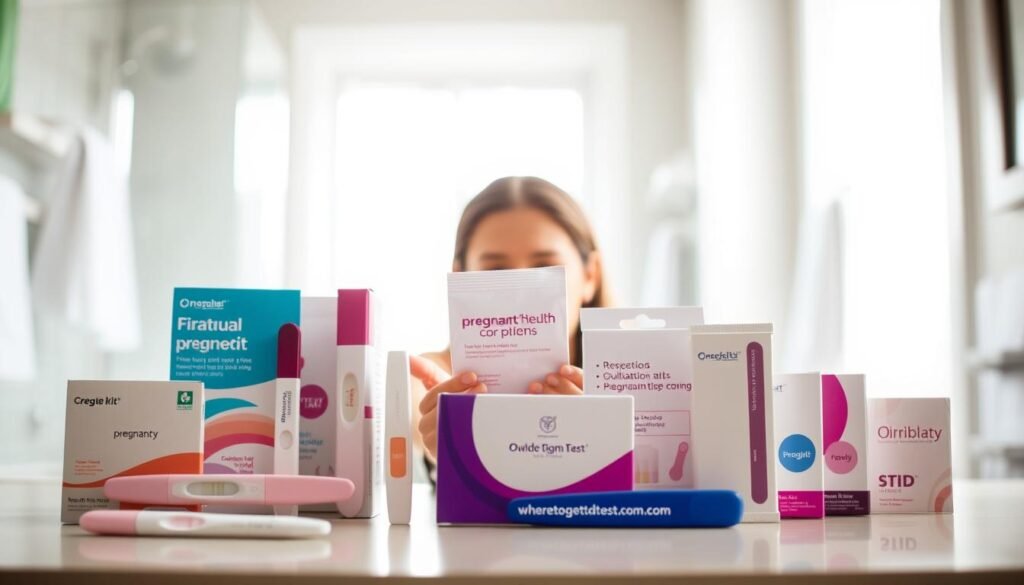
There are many ways to test for STDs during menstruation. You can choose between going to a clinic or using at-home kits. Each option has its own benefits and things to consider.
In-Clinic Testing vs. At-Home Kits
Going to a clinic has its perks. You get help from experts and get your results right away. They can also answer any questions you have.
At-home kits are convenient. You can do them privately. But, they might not be as accurate as clinic tests. Think about what’s best for you.
What Tests Are Recommended?
Some tests are key for STDs. You should get checked for chlamydia, gonorrhea, HIV, and syphilis. These tests help find infections early, if you’ve had unprotected sex.
The Role of Your Menstrual Cycle in STD Testing
Your menstrual cycle affects when and how often you should get STD tests. Keeping track of your cycle helps you remember when to go for tests. It’s key for people who are sexually active, after starting a new relationship or once a year.
Timeline for Regular Testing
It’s important to test for STDs regularly. Make a plan based on your menstrual cycle. You might feel more comfortable getting tested when you’re not on your period.
If your cycle is regular, plan your tests around it. This way, you can manage your sexual health better.
Impact of Menstrual Rhythms on Health
Hormones change during your cycle, which can affect your health. Pay attention to any symptoms that might show up. They could affect STD test results and planning.
Watching your menstrual cycle and getting STD tests regularly is good for your health. It’s a complete way to take care of yourself.
Post-Test: Understanding Your Results and Next Steps
After getting STD tested, you need to understand your results and what to do next. It takes time to get your results, so be patient. A negative test doesn’t mean you’re completely safe.
Talking openly with your doctor is key. They can help clear up any questions you have. They can also tell you if you need more tests.
Interpreting Test Outcomes
Each STD test gives you important information about your health. If the test is positive, it means you have an infection. You’ll need to get treatment and talk about your partner’s health.
If the test is negative, it’s good news. But don’t think you’re completely safe. If you’ve been at risk recently, you might need more tests.
Follow-Up Considerations
Getting follow-up tests is important for your health. Some infections can be hard to find right away. You should:
- Make sure to get follow-up tests when your doctor says.
- Tell your doctor if you have any symptoms after the test.
- Think about getting retested if you’re at risk again.
By following these steps, you can stay on top of your sexual health. Understanding your test results and what to do next helps you stay safe and healthy.
Conclusion
STD testing during menstruation is very important. It helps keep your sexual health safe. It finds hidden infections that could harm your reproductive health.
Testing for STDs often is key. It helps find and fix health problems fast. This keeps you and your partner healthy.
Talking openly about sexual health is good. It helps you stay safe and healthy. It also makes it easier to get the care you need.
Seeing your doctor regularly is smart. It helps manage your sexual and reproductive health. To learn more, visit this resource.
Getting tested for STDs regularly is good for your health. It’s a step towards staying healthy and happy.
FAQ
Can I get STD tested while on my period?
Yes, you can get STD tested while on your period. Most tests, like urine and swab tests, work well. They are not much affected by menstrual blood.
Will having my period affect the accuracy of the test results?
No, menstruation usually doesn’t mess up the test samples. Doctors can do reliable tests, like for chlamydia and gonorrhea, even when you’re on your period.
What is the best time during my menstrual cycle to schedule an STD test?
Scheduling during lighter flow days might be better. But, it’s more important to test regularly, not just when your period is light. This is true if you’ve had new partners.
What should I do to prepare for STD testing during my period?
Don’t use vaginal creams or douches before the test. Tell your doctor about your period. This helps them plan the test better.
Are there any misconceptions about getting tested during menstruation?
Yes, some think tests are less accurate or painful during menstruation. But, tests stay accurate and most procedures are easy.
Can any infections be detected during menstruation?
Yes, many STIs can be found during menstruation. Tests for chlamydia, gonorrhea, HIV, and syphilis work fine. Just tell your doctor about your period.
What are my options for STD testing while menstruating?
You can choose in-clinic testing for a full check-up or at-home kits for privacy. But, at-home kits might not be as accurate.
How often should I get tested for STIs if I’m sexually active?
Get tested at least once a year if you’re active. You might need to test more often if you have many partners or change partners a lot.
What should I do if I receive a negative result?
A negative result doesn’t mean you’re safe from STIs, if you’ve had risky sex. Talk to your doctor about more tests and safety steps.

Herpes STD Test: Accurate, Confidential Screening

Get STD Testing Without ID: Confidential & Affordable

STD Testing Solutions for Sex Workers in the US
About The Author
