STD Testing for People with Disabilities
Did you know about 1 in 10 adults in the U.S. have a disability? This can make it hard for them to get to healthcare, like STD testing. It shows we really need to make sure everyone can get the health services they need.
STDs don’t care if you can walk or not. They can hit anyone. We need to understand the special problems people with disabilities face. This helps us make things better for them.
We need to talk more about how important it is for people with disabilities to get tested for STDs. We must make sure healthcare is easy for everyone to reach. This way, everyone can get the health services they need, no matter their physical limits.
Key Takeaways
- Around 1 in 10 adults in the U.S. live with disabilities affecting healthcare access.
- STDs impact individuals irrespective of their physical abilities.
- Inclusive sexual health services are critical for well-being.
- Awareness of the unique challenges faced by people with disabilities is needed.
- Access to STD testing can enhance overall public health outcomes.
The Importance of STD Testing for Everyone
It’s key to know how disability and sexual health are linked. People with disabilities can get STDs just like anyone else. This shows that myths about their sexual lives are wrong.
Understanding STD prevalence among people with disabilities
Studies show that STDs are common among people with disabilities. They might face special risks. It’s important to teach everyone about sexual health, no matter their ability.
Common misconceptions about sexual health and disabilities
Many think people with disabilities aren’t sexually active. They also think they don’t need STD tests. These ideas are harmful and keep people from getting the care they need.
Why STD Testing for People with Disabilities is Essential
People with disabilities face special challenges with STDs. They might not feel symptoms like pain. This makes it hard to get tested and treated on time.
Not knowing about symptoms can lead to big risks. Many people with disabilities don’t get tested for STDs. This is bad for their sexual health.
Impact of disabilities on STD symptoms and detection
Some people with disabilities can’t feel common STD symptoms. This means they might not know they need help. It also means they might not get treated right away.
It’s important for people with disabilities to know about their health. They need to see their healthcare as a priority. This helps keep their sexual health safe.
Barriers to accessing healthcare for individuals with disabilities
There are big barriers to healthcare for people with disabilities. Some clinics don’t meet their needs. This makes them feel left out.
Places might not be easy to get to. Staff might not know how to help. Testing methods might not work for everyone. These problems make it hard to get care.
We need to fix these problems. We need to make healthcare more accessible. There are resources to help people with disabilities find healthcare. Learn more here.
Accessible STI Testing Locations
Finding STI testing places that are easy to get to is key for people with disabilities. These clinics should be welcoming and have the right help. They need to have things like ramps and wide doors. Also, the staff should know how to help people with disabilities.
Finding local health clinics that cater to individuals with disabilities
There are many local health clinics that help people with disabilities. You can look on health department websites or call health centers. They have special programs for different needs.
Look for clinics with:
- Wheelchair access and rooms for exams
- Staff who know about disabilities
- Private talks and help from others
Online resources for locating accessible testing services
There are also online tools to find testing places that are easy to get to. Websites have lists of places that help people with disabilities. You can search based on what you need.
- Websites of national health groups with lists
- Online groups where people share tips
- Apps to find health services near you
What to Expect During the Testing Process
It’s important to know about STI testing, even more so for people with disabilities. There are many ways to test for STIs. Each method aims to give accurate results and make the patient feel comfortable. We’ll talk about these methods and why talking openly is key during testing.
Overview of various testing methods for STIs
There are a few ways to test for STIs:
- Urine samples: These are used to find infections like chlamydia and gonorrhea.
- Blood tests: These are needed to check for infections like HIV and syphilis.
- Swabs: Swabs from the genital area can test for infections like herpes and HPV.
Communication and support during the testing procedure
Talking openly is very important during testing, even more so for people with disabilities. Doctors should talk openly to answer any questions or worries. This helps everyone understand better and feel more supported.
It’s also important to feel comfortable during testing. Having someone you know there can help a lot. Doctors can also make changes to help you feel better physically and emotionally during the test.
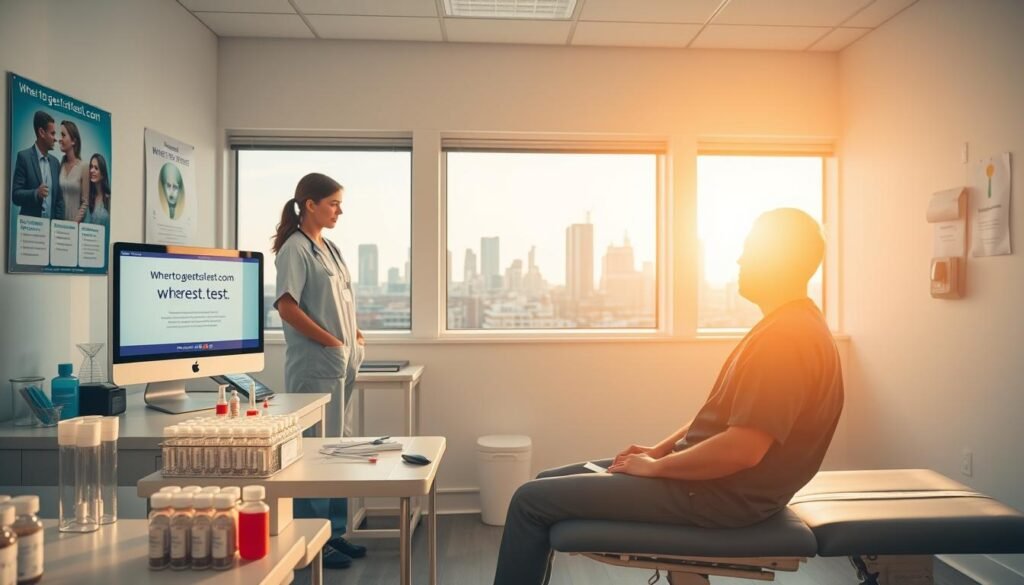
Specialized STI Testing Accommodations
Getting sexual health services can be hard for people with physical disabilities. It’s key for testing places to have special STI testing setups. These setups make sure everyone can get tested comfortably.
They might change how you sit or use special tools to help. The goal is to make everyone feel welcome and respected.
Adjustments for physical disabilities during testing
Health clinics are now making things better for people with physical disabilities. They make changes like:
- Adjustable tables for easier testing.
- Staff ready to help with moving around.
- Tools like grips to help during tests.
- Private rooms for special needs.
Emotional and mental support services available
Feeling good emotionally is important when getting STI tests. Many places now offer help to make patients feel safe and understood. They offer:
- Counselors who know about sexual health and disability.
- Groups to share and learn from others.
- Help for worries about test results.
- Training for doctors to care more.
Strategies for Safer Sex Practices
Everyone needs to practice safer sex to stop STIs. Using good strategies keeps you healthy and shows respect to your partner. Barrier methods like condoms are key to stopping STIs.
Importance of barrier methods in preventing STIs
Barrier methods are very important for safe sex. Condoms block direct contact and stop STIs from spreading. Using them often keeps you and your partner healthy and worry-free.
How to communicate safe sex practices effectively with partners
Talking about safe sex needs to be open and honest. It helps you and your partner understand and respect each other. Here are ways to talk about it:
- Start talking about safe sex early in your relationship.
- Share your thoughts and worries about sexual health.
- Let your partner ask questions without judging them.
- Talk about any problems with using protection, like feeling uncomfortable.
- Make sure your partner knows it’s both of your jobs to stay healthy.

Addressing Common Concerns and Misbeliefs
There’s a lot of wrong info about sex and disabilities. This wrong info can make people feel bad and misunderstood. It’s important to clear up these myths to help everyone feel included.
Some people think disabilities mean you can’t have sex or don’t want to. But, people with disabilities have the same sex interests and needs as everyone else. By fixing these wrong ideas, we can support everyone’s sexual health better.
Debunking myths surrounding disability and sexual health
There are many wrong ideas about sex and disabilities. Some think people with physical issues don’t want to have sex. Others believe sex is too risky for them.
But, learning about sex is important for safe and fun experiences. Knowing the truth helps us all be more understanding and open-minded.
Resources available for sexual health education
There are many places that teach about sex and disabilities. Groups like the American Sexual Health Association and Sexuality and Disability Resource Center have great info. They talk about safe sex and healthy relationships.
Using these resources can help people learn more and live better, more fulfilling lives. It’s all about being informed and supportive.
Disability-Inclusive Sexual Health Resources
It’s important for people with disabilities to get the right info about their sexual health. Resources that include disabilities help a lot. Many groups work hard to give the support needed for sexual health education.
Support organizations focused on sexual health for people with disabilities
There are many groups to help people with disabilities understand sexual health. They offer counseling, educational programs, and help in advocating for their rights. Groups like the American Association on Health and Disability and Disability Rights Advocates are very helpful.
Educational materials promoting sexual health awareness
It’s key to have good educational materials for sexual health. Many groups make guides, pamphlets, and online stuff for this. They talk about safe sex, consent, and getting tested for STDs.
Accessible STD Testing Options for Special Needs Individuals
Everyone has the right to healthcare. For those with special needs, it’s key to have easy access to tests. Health clinics need to make sure they are welcoming to everyone.
Types of accessibility features in health clinics
Health clinics can make a big difference. They should have:
- Wheelchair ramps for easy entry and exit.
- Accessible restrooms for those with mobility issues.
- Adjustable tables and tools for exams.
- Signs in large print and Braille for the blind.
- Quiet waiting areas for those who need space.
Transportation services focused on assisting individuals with disabilities
Getting to healthcare is hard for some. But, clinics can help with this. They work with local groups to offer:
| Transportation Service | Description | Availability |
|---|---|---|
| Accessible public transit | Wheelchair-accessible buses and vans. | Daily, with regular routes. |
| Ride-sharing services | Apps with accessible vehicle options. | On-demand, varies by location. |
| Non-emergency medical transportation | Special vehicles for medical visits. | Pre-scheduled appointments only. |
The Role of Healthcare Providers in Supporting STD Testing
Healthcare providers play a big role in making sure everyone can get STD tests. They need to learn how to make patients feel safe and accepted. This is key for people with disabilities.
Training healthcare professionals on inclusive practices
Training helps doctors and nurses talk to patients with disabilities in a respectful way. They learn how to communicate well and understand each patient’s needs. This makes the care better and more effective.
Importance of sensitivity in discussing sexual health with patients
Talking about sexual health can be hard, but it’s important. Doctors need to be kind and understanding. This helps patients feel more comfortable and builds trust.
Conclusion
STD testing for people with disabilities is very important. It shows we need healthcare that everyone can use. Everyone should get the care they need, no matter their health.
Learning and talking openly helps us understand each other better. This can help remove the shame around disability and sex. When we support each other, we learn more about the need for STD tests.
We all need to work together for better healthcare. We should help make health care easy for everyone. This way, everyone can live a healthy life and make good choices about their health.
FAQ
Why is STD testing important for individuals with disabilities?
STD testing is key for everyone, including those with disabilities. They can get STDs just like anyone else. It’s important to make sure they get the care they need for their sexual health.
What unique challenges do people with disabilities face regarding STD testing?
People with disabilities might find it hard to notice STD symptoms. They also face barriers when trying to get to healthcare. It’s important to have places where they can get tested easily.
How can I find accessible STI testing facilities?
Look online for places that help people with disabilities get tested. Websites and directories can show you clinics that are friendly and have the right staff.
What should I expect during the STD testing process?
You might get to give urine samples, blood tests, or swabs. Talking to your doctor is key to make sure you’re comfortable. Having someone with you can also help a lot.
What accommodations are available for individuals with physical disabilities during testing?
Places might adjust how you sit or give you tools to help. They also offer emotional support. This makes sure you get care that meets your needs.
How can I communicate safer sex practices with my partner?
Talk openly about using condoms and getting consent. It’s important to make sure you both are safe and comfortable.
What are some common misconceptions regarding sexual health and disabilities?
Some people think people with disabilities don’t have sex or need STD tests. These ideas are wrong and hurtful. We need to learn more about everyone’s sexual health.
Where can I find resources focused on sexual health for people with disabilities?
Look for groups that help with sexual health for people with disabilities. They offer advice, education, and support. This helps spread the word and help people understand.
What accessibility features should health clinics have to accommodate individuals with disabilities?
Clinics should have ramps, accessible bathrooms, and special equipment. Also, help with getting there can make a big difference.
How important is provider training in delivering inclusive care for individuals with disabilities?
Training doctors to be understanding is very important. It helps them talk to patients better and make them feel more comfortable.
STD Testing for Seniors: What You Need to Know

Immigrant STD Testing: Prioritize Your Sexual Health

STD Testing for HIV and Syphilis: Know Your Status
About The Author
