Gonorrhea Symptoms: How Soon Can Gonorrhea Appear on Hands?
Did you know over 1.6 million cases of gonorrhea are reported in the U.S. each year? This shows how important it is to know the gonorrhea symptoms. It’s surprising that gonorrhea on hands is a concern. Many think it only affects the genitals, but it can show up on hands too.
This article will help you understand the symptoms, risks, and what it means for your health and others. Knowing this can help keep everyone safe.
Key Takeaways
- Gonorrhea can often be asymptomatic, making awareness key.
- Over 1.6 million cases are reported annually in the U.S.
- Infection can show up in unexpected places, like hands.
- Knowing symptoms helps find and treat it early.
- Regular tests are a must for those who are sexually active.
- Gonorrhea can spread in many ways, so education is vital.
Understanding Gonorrhea and Its Symptoms
Gonorrhea is a common infection spread through sex. It mainly hits the reproductive areas but can also affect the throat, rectum, and eyes. Knowing the symptoms is key because they can be mild or look like other health problems. Symptoms can show up from 1 to 14 days after getting infected.
People might feel pain when they pee and see unusual discharge from their penis or vagina. Women might feel stomach pain that feels like menstrual cramps. Spotting these signs early helps in diagnosing gonorrhea.
Not knowing you have gonorrhea can spread it more. Getting tested regularly and knowing the symptoms helps stop it from spreading. Catching it early is good for your health and keeps your partners safe too.
| Symptom | Description | Time to Appear |
|---|---|---|
| Discomfort during urination | Burning sensation while urinating | 1 to 14 days |
| Unusual discharge | Thick, yellow or white discharge from the genital area | 1 to 14 days |
| Abdominal pain | Can vary in intensity, possibly mimicking menstrual cramps | 1 to 14 days |
| Infection in the throat | Possible sore throat or no symptoms | 1 to 14 days |
| Rectal infection | Discomfort, itching, or discharge | 1 to 14 days |
Gonorrhea Symptoms in Men and Women
It’s important to know the gonorrhea symptoms in males and gonorrhea symptoms in females. Both men and women can get gonorrhea. But, the signs can be different. This affects how easy it is to find out and treat the disease.
Common Symptoms in Males
In men, symptoms show up 2 to 5 days after getting infected. They often include:
- Burning when you pee
- Yellowish or whitish discharge from the penis
- Pain or swelling in the testicles
Seeing these signs early is key. Untreated gonorrhea can cause serious problems, like not being able to have kids.
Common Symptoms in Females
Women often don’t show clear signs of gonorrhea. This can make it hard to catch. Common signs are:
- Burning when you pee
- More vaginal discharge
- Bleeding between periods
Some women might not show any signs. This can be risky for them and their partners.
How Soon Can Gonorrhea Appear on Hands?
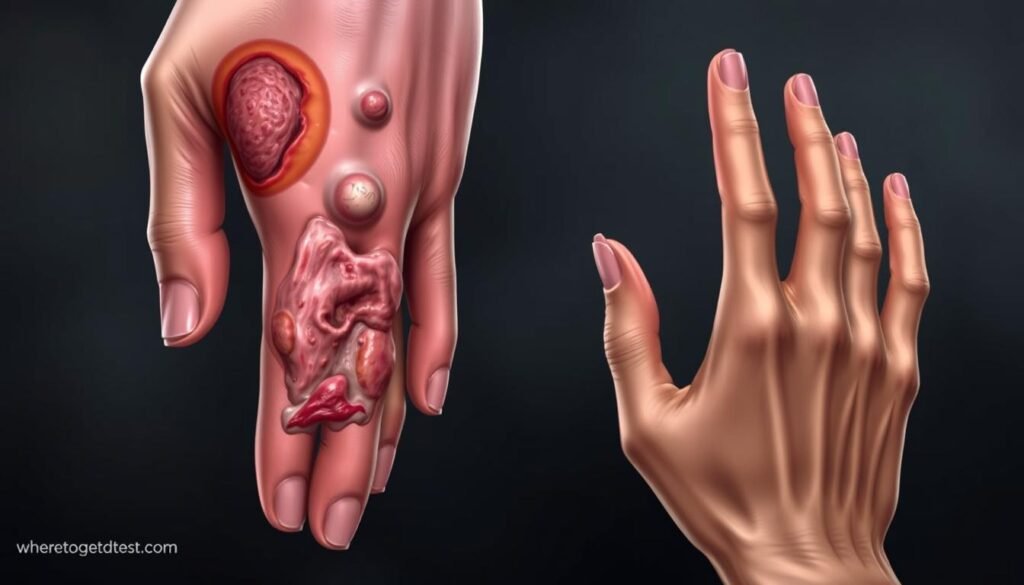
Gonorrhea can spread through touching infected secretions. It’s rare for gonorrhea to show up on hands. But, it can happen if someone touches their genitals and then touches another person.
Symptoms of gonorrhea on hands are not common. But, touching infected hands to the eyes can cause conjunctivitis. This is a serious eye infection.
How soon gonorrhea symptoms appear can vary. Symptoms usually start 1 to 14 days after getting infected. This shows why good hygiene and awareness are key to prevent spreading the disease.
| Days Post-Exposure | Possible Symptoms |
|---|---|
| 1-2 Days | May remain asymptomatic or show mild irritation |
| 3-7 Days | Initial symptoms may begin to develop |
| 8-14 Days | More pronounced symptoms may appear, including discomfort and possible secondary infections |
Gonorrhea Transmission: What You Need to Know
It’s important to know how gonorrhea spreads. This infection mainly spreads through sex. It can also pass from mom to baby during birth. The risk goes up with more sexual partners and without protection.
Modes of Transmission
The main ways gonorrhea spreads are:
- Vaginal intercourse
- Anal intercourse
- Oral sex
- Mother-to-child transmission during delivery
Hands can also spread the infection, but it’s less common. If infected hands touch mucous membranes or fluids, it can spread.
Risks of Transmission via Hands
Hands can spread gonorrhea, but it’s rare. It happens when infected hands touch other people or surfaces.
- Touching infected genital areas and then touching surfaces or other individuals
- Inadequate hand hygiene after possible exposure
Good hand hygiene is key. Knowing how it spreads helps. Regular tests for sexually active people are important. They help lower the risk and keep you healthy.
| Transmission Mode | Risk Level |
|---|---|
| Vaginal Intercourse | High |
| Anal Intercourse | High |
| Oral Sex | Moderate |
| Mother-to-Child | High |
| Hands Contact | Low |
Gonorrhea Diagnosis: How Is It Detected?
Finding out if you have gonorrhea is very important. Doctors use two main ways to check: urine tests and fluid cultures. These tests find the bacteria that causes gonorrhea, helping doctors know for sure if you have it.
Some people might show signs of gonorrhea. But, it’s key for everyone who is sexually active to get tested often. Even if you don’t feel sick, you could have gonorrhea. Getting tested regularly helps find and treat it early, which is good for your health.
Tests usually show results about two weeks after you might have gotten infected. This is called the “window period.” During this time, you can get tested without anyone knowing. This helps you get treated sooner.
| Testing Method | Description | Timeframe for Results |
|---|---|---|
| Urine Test | A simple test where urine is collected to check for the bacteria | 2 weeks post-exposure |
| Fluid Culture | Samples collected from infected areas are grown in a lab to identify the bacteria | 2 weeks post-exposure |
Gonorrhea Treatment: Effective Solutions
Treating gonorrhea is key to avoiding more problems and keeping you healthy. Symptoms can be managed with the right antibiotics. A mix of ceftriaxone and azithromycin is usually given. This combo works fast to stop issues like infertility or pelvic disease.
It’s very important to start treatment early. If you have gonorrhea, don’t have sex until you’re all done with treatment. This helps you get better and keeps your partners safe too.

It’s also smart to get your sexual partners tested and treated at the same time. This way, you avoid getting sick again and help stop gonorrhea from spreading.
| Gonorrhea Treatment Options | Effectiveness | Administration Method |
|---|---|---|
| Ceftriaxone + Azithromycin | High | Single Injection |
| Alternative Antibiotics | Varies | As prescribed based on sensitivity |
| Follow-up Testing | Essential | Post-treatment Evaluation |
Knowing about gonorrhea treatment shows we care about STD treatment. Talking to your doctor helps you get the right care for you.
Gonorrhea Prevention Strategies
Keeping your sexual health safe is key. Using condoms is a big help. It stops gonorrhea by blocking infected fluids.
Having fewer partners helps too. It lowers the risk of getting sick. Talking openly with your partner is also important.
Getting tested for STDs often is a must. It catches problems early. For more on testing, check out know your status.
Learning about gonorrhea is also important. Knowing how it spreads and what it looks like helps you stay safe. Good education leads to a safer community.
In short, using these steps together fights gonorrhea well. Making smart choices keeps everyone healthy.
Gonorrhea Complications: Long-Term Health Risks
Gonorrhea can cause serious problems if not treated. It affects both men and women. Women might get pelvic inflammatory disease (PID).
PID can lead to chronic pain and infertility. This is a big health risk.
Men might face swelling and pain in their testicles. They could also lose their ability to have children. It’s key to catch gonorrhea early and treat it well.
Untreated gonorrhea can spread through the blood. This can harm many organs. It’s vital to get checked often and act fast if you’re at risk.
Conclusion
Gonorrhea is a big problem in public health. Many people don’t know they have it because it often doesn’t show symptoms. It’s important to know the signs of gonorrhea to get help early.
How gonorrhea spreads is complex. This makes it key to know how to prevent it. People who are sexually active need to be careful and aware.
Getting tested for gonorrhea regularly is very important. Finding it early helps stop it from spreading. Talking openly about sex and making smart choices helps everyone stay healthy.
We need to tell more people about gonorrhea. Learning about its symptoms, how it spreads, and how to prevent it helps a lot. This way, we can all work together to make our society healthier.
FAQ
What are the common symptoms of gonorrhea?
Symptoms of gonorrhea include a burning feeling when you pee. You might also see unusual discharge or feel pain in your belly. Women might notice more discharge or bleeding between periods, which can be mild.
How soon can symptoms of gonorrhea appear after exposure?
Symptoms can show up 1 to 14 days after you get infected. Men usually notice symptoms 2 to 5 days after. Women might not notice symptoms as much, which can make it harder to get diagnosed.
Can gonorrhea appear on the hands?
It’s rare for gonorrhea to show up on your hands. But touching your eyes after touching infected areas can cause eye infections like conjunctivitis.
How is gonorrhea diagnosed?
Doctors use urine tests or culture tests to find gonorrhea. It’s important to get tested regularly, even if you don’t feel sick.
What are the treatment options for gonorrhea?
Doctors treat gonorrhea with antibiotics. You’ll usually get a single dose of ceftriaxone and azithromycin. Getting treatment early helps avoid serious problems like infertility.
How can gonorrhea be prevented?
To prevent gonorrhea, use condoms and have fewer sex partners. Getting tested regularly is also key. Talking openly with your partner about STIs helps too.
What complications can arise from untreated gonorrhea?
Untreated gonorrhea can cause serious problems. Women might get pelvic inflammatory disease or infertility. Men might face testicular swelling or infertility. It can also spread to the blood, causing infections all over.
How does gonorrhea transmit between individuals?
Gonorrhea spreads through sex, including the penis, vagina, mouth, or anus. It can also pass from mother to child during birth. Having many partners or not using protection increases the risk.
Why is regular gonorrhea testing important?
Testing for gonorrhea regularly is key because many people don’t show symptoms. But they can spread the infection. Catching it early and treating it helps keep you and others healthy.

Gonorrhea Symptoms: When Can You Expect Them?

Undetected STD Symptoms to Watch For

Gonorrhea Symptoms: How Soon & Stages Explained
About The Author
