Conquer Yeast Infection with These Easy Tips
Did you know that about 75% of women get a yeast infection at some point? This shows how common yeast infections are. They happen when *Candida albicans* grows too much. Knowing how to fight yeast infections is key to staying healthy.
In this article, we’ll share easy ways to fight yeast infections. You’ll learn simple tips to help you stay healthy. These tips are easy to follow and can make a big difference.
Key Takeaways
- Yeast infections are very common, hitting many women.
- Keeping clean is important to fight yeast infections.
- There are many home remedies for yeast infections.
- Knowing the causes and signs helps prevent them.
- Small changes in your life can lower your risk of getting yeast infections.
Understanding Candida Infection
Yeast infections are caused by a fungus called Candida. It’s a tiny organism that lives in our bodies. When bacteria in our body gets out of balance, Candida can grow too much. This leads to infections.
The Basics of Yeast Infections
Yeast infections like to grow in warm, wet places. They often happen in the genital area, mouth, and skin folds. If our body’s defenses get weak, or if we take antibiotics or go through hormonal changes, we might get a yeast infection.
Common Types of Yeast Infections
- Vaginal Candidiasis: This is a yeast infection in the vagina. It can cause discomfort, itching, and unusual discharge.
- Oral Thrush: This infection is in the mouth and throat. It makes white patches, hurts, and makes it hard to swallow.
Knowing about these infections helps us spot symptoms early. This means we can get treatment quickly.
Symptoms of Yeast Infections
Knowing the signs of yeast infections is key. Spotting them early helps manage symptoms better. People may see different signs, which can change in how bad they are and how long they last.
Common Signs to Look For
Some common symptoms are:
- Itching in the vaginal area
- Burning sensation when you pee or have sex
- Discharge that looks like cottage cheese
- Redness and swelling around the vagina
Spotting these signs early can help manage the infection better.
When to Seek Medical Attention
Knowing when to see a doctor is important. You should go if:
- Symptoms last more than a few days
- Symptoms get worse or are very bad
- This is your first yeast infection
- You think it might be an STI
Yeast Infection Treatment Options
Understanding the different ways to treat yeast infections is key. There are many options, from over-the-counter meds to doctor’s prescriptions. This lets people choose what works best for them.
Over-the-Counter Medications
Many people find relief with over-the-counter meds. These come as creams or suppositories with ingredients like miconazole or clotrimazole. They help get rid of the yeast and ease symptoms.
These products are easy to find at pharmacies. They’re a good choice for quick relief.
Prescription Antifungal Treatments
For serious or ongoing infections, doctors might suggest stronger meds. These include fluconazole. It’s important to follow the treatment plan and talk to a doctor if problems don’t go away.
Simple Ways on How to Fight Yeast Infection
There are many ways to fight yeast infections. Keeping clean and making healthy choices are key. These steps help you feel better.
Maintaining Good Hygiene
Good hygiene is important to stop yeast infections. Wash your genital area with mild soap and warm water. Stay away from scented products.
Let your body dry after you bathe or work out. This stops yeast from growing.
Avoiding Triggers Such as Antibiotics
Try not to take antibiotics unless you really need them. They can upset the balance of your body’s bacteria. This makes yeast grow too much.
Drink lots of water and try to relax. A strong immune system helps fight yeast infections.
Natural Ways to Treat Yeast Infection
Looking for natural ways to treat yeast infection can help many people. Using things that help the body fight off infection is key. Here are some home remedies that people find helpful.
Eating Probiotics and Yogurt
Eating yogurt with live cultures and probiotics is good. These foods keep the gut healthy and help fight yeast. Probiotics help keep the body’s natural balance, which fights off infection.
Using Coconut Oil and Tea Tree Oil
Coconut oil has natural antifungal powers. It’s great for treating yeast infection. You can put coconut oil on your skin to help symptoms.
Tea tree oil also fights fungus. But, use it carefully. Mix it with another oil to avoid skin problems.
| Natural Treatment | Benefits | Application Method |
|---|---|---|
| Yogurt with Live Cultures | Restores gut flora | Consume daily as part of diet |
| Coconut Oil | Antifungal properties | Apply directly to affected area |
| Tea Tree Oil | Fights fungal growth | Mix with carrier oil before applying |
Effective Remedies for Yeast Overgrowth
Many people look for natural ways to fight yeast overgrowth. Garlic and oregano oil are two popular choices. They are safe and work well.
Using Garlic and Oregano Oil
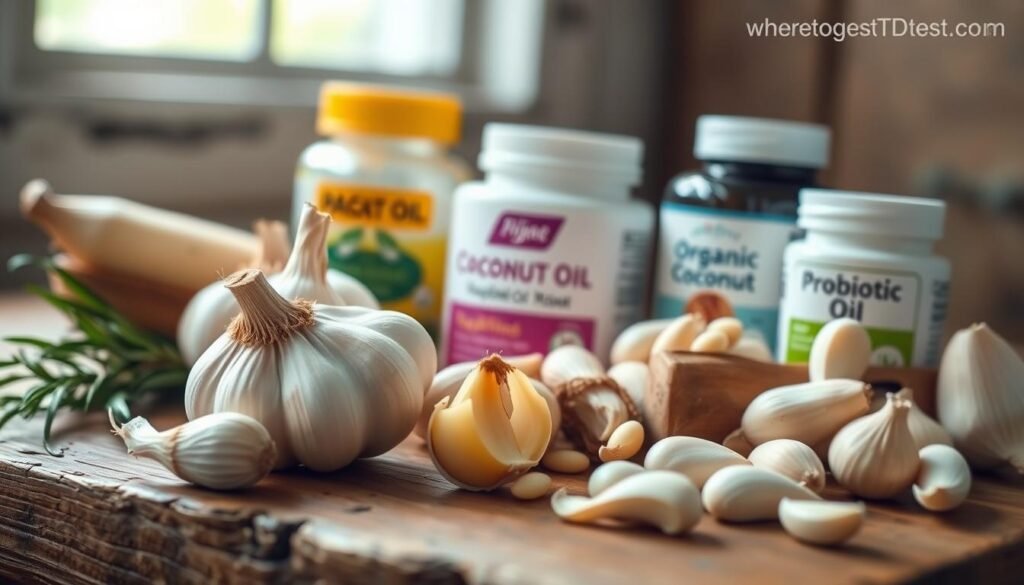
Garlic is a strong fighter against yeast. It has special compounds that stop yeast from growing. Oregano oil has carvacrol and thymol, which also fight yeast well.
Adding these to your routine can help. They can make you feel better and keep you healthy.
Applying Boric Acid Suppositories
Boric acid suppositories are good for yeast infections. They make the vagina environment stable. This helps fight yeast.
They are great for people with ongoing problems. Always talk to a doctor before trying new treatments.
Preventing Yeast Infection Naturally
Preventing yeast infection naturally is key to feeling good. Eating right and staying clean are important. They help keep your body in balance and stop yeast from growing too much.
Maintaining a Balanced Diet
Your diet affects your vagina’s health. Foods with sugar can make yeast grow. But, foods rich in fiber help your gut stay healthy.
Eating fruits, veggies, and whole grains is good. Here are some foods to eat:
- Fruits and vegetables for vitamins and antioxidants
- Whole grains for fiber
- Fermented foods like yogurt and kefir for probiotics
Keeping the Vaginal Area Dry
Yeast loves moisture. To stop it, wear cotton underwear and change wet clothes fast. Here are more tips:
- Using panty liners to absorb moisture
- Avoiding tight-fitting clothes
- Practicing good bathing habits
Using these natural ways to fight yeast helps your body stay healthy. Small changes can make a big difference. This makes it easier to stay healthy.
Holistic Approaches for Yeast Infection
Dealing with yeast infection means looking at your whole health. It’s about keeping your body and mind strong. This part talks about how to boost your immune system and make lifestyle changes for better health.
Boosting Your Immune System
Keeping your immune system strong is key to fighting yeast infections. Regular exercise, enough sleep, and managing stress are important. Eating foods full of vitamins C and E, like fruits and veggies, helps a lot.
These steps not only fight yeast infections but also make you feel better overall.
Integrating Lifestyle Changes
Changing your lifestyle can really help balance your body’s bacteria and yeast. Using less commercial body wash and choosing natural products is good. Wearing clothes that breathe helps keep moisture away, which yeast doesn’t like.
Staying away from douches helps keep your body’s natural defenses strong. These changes make your vagina healthier. For more tips, check this resource.
| Lifestyle Change | Benefits |
|---|---|
| Regular Exercise | Boosts immunity and reduces stress |
| Adequate Sleep | Enhances immune function |
| Breathable Clothing | Prevents moisture buildup |
| Avoiding Douches | Maintains healthy vaginal flora |
| Natural Personal Care Products | Minimizes disruption to microbial balance |
Adding these holistic ways to fight yeast infection to your daily life helps prevent it. It also makes you feel good. Being proactive helps your body fight off infections better.
Conclusion
Managing a yeast infection needs a mix of medical and natural steps. Knowing the symptoms and treatment options helps a lot. You can find relief with over-the-counter medicines or natural remedies like yogurt and coconut oil.
If you keep getting yeast infections, see a doctor. They can find out if there’s something else going on. Being informed and taking care of your health is important.
Changing your lifestyle and using natural remedies can help a lot. Eating well, keeping your immune system strong, and staying clean are key. Knowing what to do and taking action is the best way to beat yeast infections and stay healthy.
FAQ
What causes a yeast infection?
Yeast infections happen when Candida albicans grows too much. This fungus is always in our bodies. Things like a weak immune system or too much estrogen can cause it to grow too much.
How can I prevent yeast infections naturally?
To stop yeast infections, keep clean and avoid antibiotics unless needed. Wear cotton underwear and stay dry. Eating less sugar helps keep your body healthy.
Are there home remedies for treating yeast infections?
Yes, you can use yogurt, probiotics, coconut oil, and tea tree oil to help. Garlic and oregano oil also fight fungus.
When should I see a doctor for yeast infection symptoms?
See a doctor if symptoms last more than a few days or get worse. Also, go if it’s your first time or if it keeps coming back.
What are the common symptoms of a yeast infection?
Signs include itching, burning, and discharge that looks like cottage cheese. You might also feel pain when you pee or have sex.
What over-the-counter treatments are available?
You can buy creams or suppositories with miconazole or clotrimazole. They work well for many vaginal yeast infections.
Can dietary changes affect the likelihood of getting a yeast infection?
Yes, eating less sugar and more fiber helps keep your vagina healthy. Yogurt and probiotics also help your body fight off infections.
About The Author
