Undetected STD Symptoms to Watch For
Did you know that nearly 70% of people with certain STDs may not show any symptoms? This is a big reason why it’s so important to know the signs of STDs, even if they don’t cause discharge. Many people carry STDs without knowing it, which can be risky for them and their partners.
It’s key for sexually active people to watch for signs of STDs without discharge. Catching an STD early can help you get better faster and avoid bigger problems.
Key Takeaways
- Many STDs can remain undetectable without typical symptoms.
- Understanding non-discharge STD symptoms is essential for sexual health.
- Regular screening is key to prevent spreading STDs.
- Awareness of signs of STD without discharge helps immediate action.
- Common asymptomatic STDs include HPV, chlamydia, and gonorrhea.
Introduction to STDs and Asymptomatic Infections
Sexually transmitted diseases (STDs) are infections spread through sex. They are caused by bacteria, viruses, or parasites. This is a big problem for public health.
Some people can carry and spread infections without showing symptoms. This is called asymptomatic STDs. It makes it hard to stop the spread of diseases.
Many people with STDs don’t show symptoms. This includes infections like chlamydia and gonorrhea. They might not even know they have it. This can lead to spreading the disease to others.
Numbers show how serious this is. About 50% of men and 70% of women with chlamydia don’t show symptoms. We need to know more about STDs to keep everyone healthy.
Understanding the Importance of STD Testing
STD rates are going up in the United States. This shows how important it is for people who are sexually active to get tested. Many STDs don’t show symptoms, which makes them spread more.
Getting tested regularly is key. It helps people take care of their health and make smart choices.
Doctors say not everyone knows their risk for STDs. Testing should match a person’s health history and lifestyle. It helps keep everyone safe in intimate relationships.
Talking openly about sexual health is good. It helps people understand the need for regular tests. Knowing your health status helps get treatment early. This lowers the risk of serious problems from untreated STDs.
Common STDs That Can Be Asymptomatic
Many people don’t know that some STDs don’t show symptoms. This means they can go unnoticed for a long time. This can lead to serious health problems. Knowing about these infections helps us spot them, even without obvious signs.
Human Papillomavirus (HPV)
HPV is a common STD found all over the world. Many people don’t know they have it because they don’t show symptoms. Some types can cause warts, while others can lead to cancer.
Getting regular check-ups is key to managing HPV risks. For more info on HPV, check out this resource.
Chlamydia
Chlamydia often doesn’t show symptoms, mainly in women. It can harm the cervix if not treated. It can also affect the throat or rectum without any signs.
Getting tested regularly is important. It helps catch Chlamydia early and prevent bigger health problems.
Gonorrhea
Gonorrhea also often doesn’t show symptoms. This can make people think they’re okay. It can affect different parts of the body, like the urethra, throat, and rectum.
Because it doesn’t show symptoms, it’s important to get tested often. This helps stop serious health issues.
Signs of STD Without Discharge
Many people don’t know about the small signs of STD without discharge. Some infections don’t show symptoms. It’s key to know these signs to stay healthy and get tested on time.
Characteristics of Asymptomatic Infections
People with no discharge STD symptoms might feel:
- Occasional mild discomfort
- Localized sores or bumps
- Unusual itching or irritation
- Changes in urination sensation
These signs might seem like small problems. But, they could mean you have an STD. It’s vital to remember that no symptoms don’t mean no risk.
Why Symptoms May Not Occur
Some STDs don’t show symptoms because of the body’s immune system. The body might keep the infection hidden. If not treated, this can cause big health problems later.
| Characteristic | Possible Symptoms |
|---|---|
| Mild Discomfort | Localized soreness, minimal pain during certain activities |
| Itching or Irritation | Uncommon sensations, usually sporadic |
| Changes in Urination | Discomfort or burning sensation without visible discharge |
It’s important to notice these signs for your health and your partner’s. Getting tested regularly can find infections early, even without symptoms.
Genital Herpes: Silent Yet Contagious
Genital herpes is a big worry in the world of STDs. Many people carry this virus without knowing it. This is because some people have very mild symptoms or none at all.
This leads to accidental spreading of the virus. It puts both the person with the virus and their partners at risk.
It’s important to know how genital herpes spreads. The virus can be on the skin even when there are no sores. This means people can spread the virus without knowing it.
This is true even when there are no symptoms. So, the virus can spread easily, even when it doesn’t seem like it.
To show the risks of asymptomatic genital herpes, here’s a table. It compares this infection to the one with symptoms.
| Characteristic | Asymptomatic Genital Herpes | Symptomatic Genital Herpes |
|---|---|---|
| Visible Sores | None | Frequently Present |
| Symptoms | Mild or Absent | Severe Pain, Itching |
| Transmission Risk | High, Even Without Symptoms | High, During Outbreaks |
| Awareness of Infection | Low | High |
| Long-Term Management | Needed | Antiviral Treatment Advised |
People with active sex lives should talk openly about their health. They should also get tested regularly. Being aware and taking steps can lower the risk of outbreaks and spreading the virus. This helps make sexual relationships healthier.
HIV: The Hidden Threat
The Human Immunodeficiency Virus (HIV) is a big health risk. It often stays hidden for years. People with HIV might not feel sick right away.
The virus slowly weakens the immune system. Early signs can feel like a mild flu. But many don’t know they’re infected, leading to hidden HIV spread.
It’s key to get tested for HIV, if you’re sexually active. Not catching HIV early can cause serious health problems. Knowing the risks helps keep everyone healthy and stops the disease from spreading.

It’s important to talk openly about HIV and get tested. This helps keep communities safe. By being open and getting tested, we can all help stop HIV from spreading.
Potential Complications from Unnoticed STDs
Unnoticed STDs can cause big health problems. People often don’t know about these risks. It’s important to learn about them to stay healthy.
Long-Term Health Implications
Not treating STDs can lead to serious health issues. These can affect your life a lot. Here are some examples:
- Infertility: STDs like chlamydia and gonorrhea can harm your reproductive organs. This can make it hard to have kids.
- Chronic Pain: Untreated STDs can cause long-lasting pain. This can make everyday life hard and affect your mood.
- Increased Susceptibility: If you don’t treat STDs, you might get other infections. This includes HIV.
- Pregnancy Complications: Untreated STDs in pregnant women can harm both mom and baby. This includes low birth weight and early birth.
Knowing about these risks is key. It shows why regular check-ups are important for your health.
| Complication | Description |
|---|---|
| Infertility | Reduced ability to conceive due to damage in reproductive organs. |
| Chronic Pain | Persistent pain affecting the pelvic area or other regions. |
| Increased Risk of Other STDs | Higher likelihood of contracting additional infections, including HIV. |
| Pregnancy Complications | Potential risks to mother and newborn, affecting health outcomes. |
High-Risk Groups for STD Transmission
Knowing who is at high risk for STDs is key for health. It helps us make better plans to stop these diseases. Some groups are more at risk because of their age, lifestyle, or how they have sex.
Young people, 15 to 24, are at high risk. They might have more partners and not always use condoms. This makes them more likely to get STDs. Also, people who have had STDs before are more likely to get them again.
Men who have sex with men (MSM) are also at high risk. STDs are more common in this group because of stigma and less access to help. It’s important to reach out to them with special education to lower STD rates.
| Risk Factor | High-Risk Group | Preventive Strategies |
|---|---|---|
| Young Age | Individuals aged 15-24 | Comprehensive sexual education, access to testing |
| Multiple Partners | Young adults, MSM | Promotion of safe sex practices, condom distribution |
| Previously Infected | Individuals with a history of STDs | Regular screenings and awareness campaigns |
It’s important to know who is at risk for STDs to help them. Better education and talking can lower disease rates. This makes the whole community healthier.
Preventing STDs: Safe Practices
Safe sex practices are key to stop STDs. Taking steps to protect yourself can really help. It keeps you and your partner safe.
Effective Use of Protection
Wearing condoms is a top way to stop STDs. They act as a shield against infections. It’s also vital to talk openly with your partner about your past.
Having fewer partners lowers STD risks. Getting vaccinated for diseases like HPV and hepatitis is smart. These steps make sex safer for everyone.
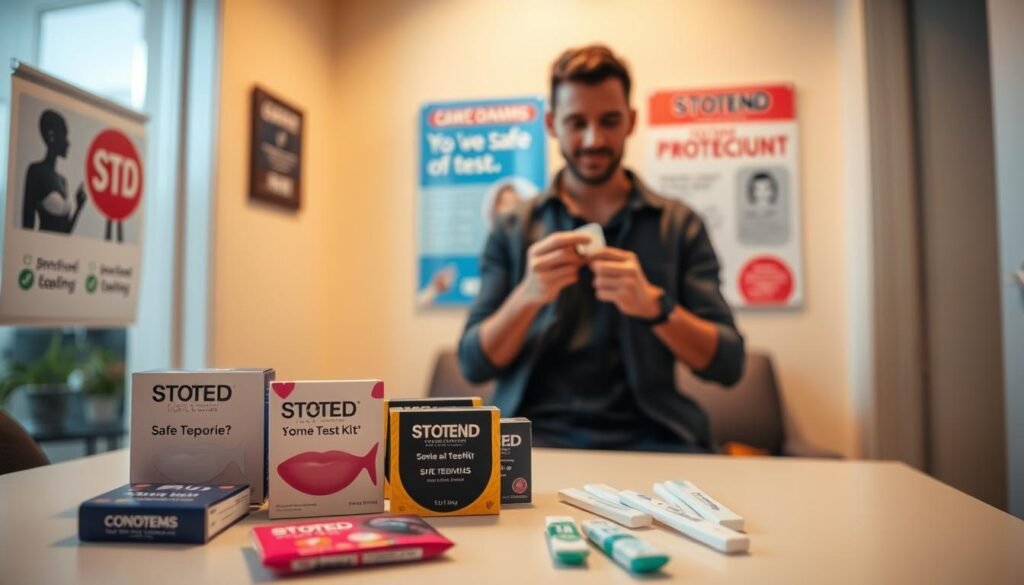
The Vital Necessity of Regular Screening
Getting regular STD tests is very important for people who are sexually active. Many STDs don’t show symptoms, so testing is key to staying healthy. How often you should get tested depends on your risk, like how many partners you have and where you live.
Testing early helps stop infections from spreading. Doctors say people who are active should get tested yearly. Those at higher risk might need to go more often.
Being proactive about your health is good. Regular tests help you stay healthy and make smart choices in relationships. Knowing why regular tests are important helps you protect your health.
How to Communicate About STD Risks with Partners
Talking openly about sexual health is key to trust in any relationship. It lets both partners share their past and current sexual activities. Starting these talks can be hard, but making it comfy can help a lot.
Find a quiet, relaxed spot for these talks. This makes everyone feel safer and less worried. It’s important for both to share freely without fear of being judged.
Use simple, clear words when talking about sex. Asking questions and sharing feelings helps everyone understand better. For example:
- What are your thoughts on getting tested for STDs?
- How do you feel about discussing our sexual health history?
Talking about how to avoid STDs and getting tested together is also important. It shows you care about each other’s health and safety. This makes your relationship stronger.
Good communication about STDs leads to better health habits. It’s not just about safety. It also makes your bond stronger.
Conclusion
It’s key to know about hidden STD symptoms for our health. Many STDs don’t show signs like discharge. Yet, they can be very harmful.
Learning about STDs is very important. Knowing the risks helps us stay safe. Regular tests are a smart way to check our health.
By knowing about STDs, we help ourselves and others. Talking openly about sexual health is good. It makes everyone healthier and reduces fear.
FAQ
What are some common STD symptoms without discharge?
Common symptoms without discharge include mild discomfort or irritation. You might also feel localized sores or unusual sensations in the genital area. Sometimes, you might get flu-like symptoms, like with HIV.
Can you have an STD and not know it?
Yes, many people have STDs without symptoms. This is called being an asymptomatic carrier. For example, about 50% of men and 70% of women with chlamydia don’t show symptoms.
Why is regular STD testing important?
Regular testing is key because it catches infections early. This prevents serious health problems and stops the spread of STDs. It’s vital for anyone who is sexually active, even if they don’t have symptoms.
What STDs are known to be asymptomatic?
STDs like HPV, chlamydia, gonorrhea, and genital herpes often don’t show symptoms. Knowing this helps manage your sexual health better.
How can you recognize signs of an STD without discharge?
Signs without discharge include discomfort in the genital area or sores. You might also feel pain when you pee or have unusual sensations. These signs can be easy to miss unless you watch for them.
What complications can arise from unnoticed STDs?
Unnoticed STDs can cause serious problems like infertility or chronic pain. They can also increase the risk of other infections. For pregnant women, untreated STDs can harm their babies.
What are effective ways to prevent STDs?
To prevent STDs, use condoms correctly and talk openly with your partner. Try to have fewer sexual partners. Also, get vaccinated against HPV and hepatitis.
How should I discuss STD risks with my partner?
Talk about STD risks in a comfortable setting. Make sure you both feel safe and trusted. Share your sexual histories openly. This helps you both understand each other better and ensures you test regularly.

Gonorrhea Symptoms: How Soon & Stages Explained

Gonorrhea Symptoms: When Can You Expect Them?

Gonorrhea Symptoms: How Soon Can Gonorrhea Appear on Hands?
About The Author
